Drinking Fountains for Schools and Public Spaces: Accessibility, Durability and Placement
How to choose and place drinking fountains for schools, parks and transport hubs: AS 1428 accessibility, durability, grade and installation.
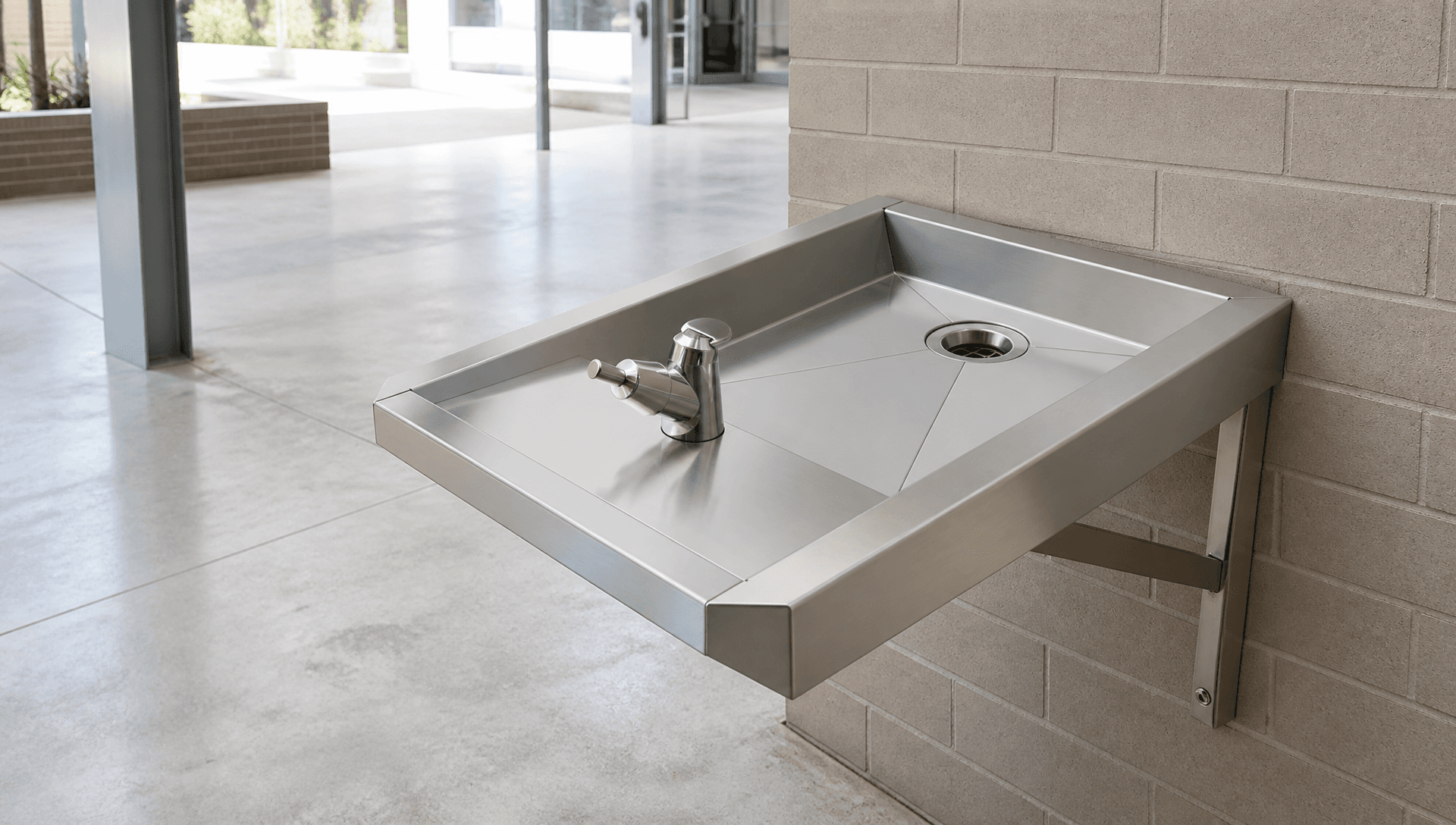
With Australian summers getting hotter, access to drinking water in schools, parks and public spaces matters more than ever. Drinking fountains also help reduce single-use plastic bottles. But a fountain that's hard to reach, easily damaged or wrongly placed won't do its job. Here's what to consider.
Why drinking fountains matter
- Health: easy access to water helps keep children and the public hydrated, particularly in hot weather.
- Sustainability: fewer single-use bottles.
- Equity: free water for everyone in public spaces.
Accessibility
Accessible drinking fountains let people who use wheelchairs, and children, use the fountain independently. In Australia, accessibility requirements are set out in AS 1428.
The SMC DFD1 accessible drinking fountain is fitted with a lever-action AS 1428 compliant bubbler, and is AS 1428 compliant when mounted at the regulation height (details). It also has a lockable hinged cover.
The SMC DFTB twin-bowl fountain offers one side that's AS 1428 compliant for accessible use and one side for able-bodied use, so one fixture serves everyone (details).
Installation height and clear floor space are critical. Follow the drawings and the relevant standard, and confirm with your access consultant.
Durability and vandal resistance
Fountains in schools and public spaces get heavy use and sometimes misuse. Stainless steel is robust and easy to clean, which is why it's the usual choice. Look for:
- Solid stainless construction
- Secure mounting: base fixing plates or concealed mounting brackets
- Robust bubblers and controls
- Lockable covers for access to the internals
Grade selection for the environment
- Grade 304 suits most inland and sheltered locations.
- Grade 316 (marine) suits coastal parks, foreshores and pools, where salt and chlorides are present. The DFTB is available in marine grade 316.
Read our guide to 304 vs 316 stainless for more.
Placement
- Near activity: playgrounds, sports fields, canteens, transport stops and walking paths
- Visible and accessible: on accessible paths of travel, with clear space for wheelchair users
- Shaded where possible: keeps water and surfaces cooler
- Drained properly: avoid pooling water and slip hazards
- Away from contamination sources: such as bins
Installation and maintenance
The DFTB is supplied with bubblers fitted and plumbed for a single connection point, suitable for mains-pressure cold water, which simplifies installation. For maintenance:
- Clean surfaces and bubblers regularly
- Check water pressure and flow
- Inspect for damage, and secure covers
- Follow local health guidance for water quality
SMC options
SMC Stainless makes seven drinking fountain models for schools, parks and transport facilities, including the DFD1 accessible fountain and the DFTB twin-bowl fountain. All are stainless steel, made to order in Western Sydney, with grade and finish options (browse fountains).
For schools planning summer works, fountains are a quick upgrade. Order early enough to install over the break.
Frequently asked questions
What makes a drinking fountain AS 1428 compliant? The fixture design and the installation, including mounting height and clear floor space. The DFD1 is AS 1428 compliant when mounted at the regulation height. Confirm details with your access consultant.
Should schools choose 304 or 316? Grade 304 suits most inland schools. Choose 316 for coastal sites or where salt and chlorides are present.
Can fountains connect to mains water? The DFTB is suitable for connection to mains-pressure cold water supply and is plumbed for a single connection point.
Can fountains be locked? The DFD1 has a lockable hinged cover for secure access to internals.
Are bottle-fillers available? Ask our team about current models and options across the seven-model range.
How should fountains be maintained? Clean regularly, check flow and pressure, inspect for damage, and follow local health guidance on water quality.
Need help choosing? Contact SMC or browse the drinking fountain range.
